
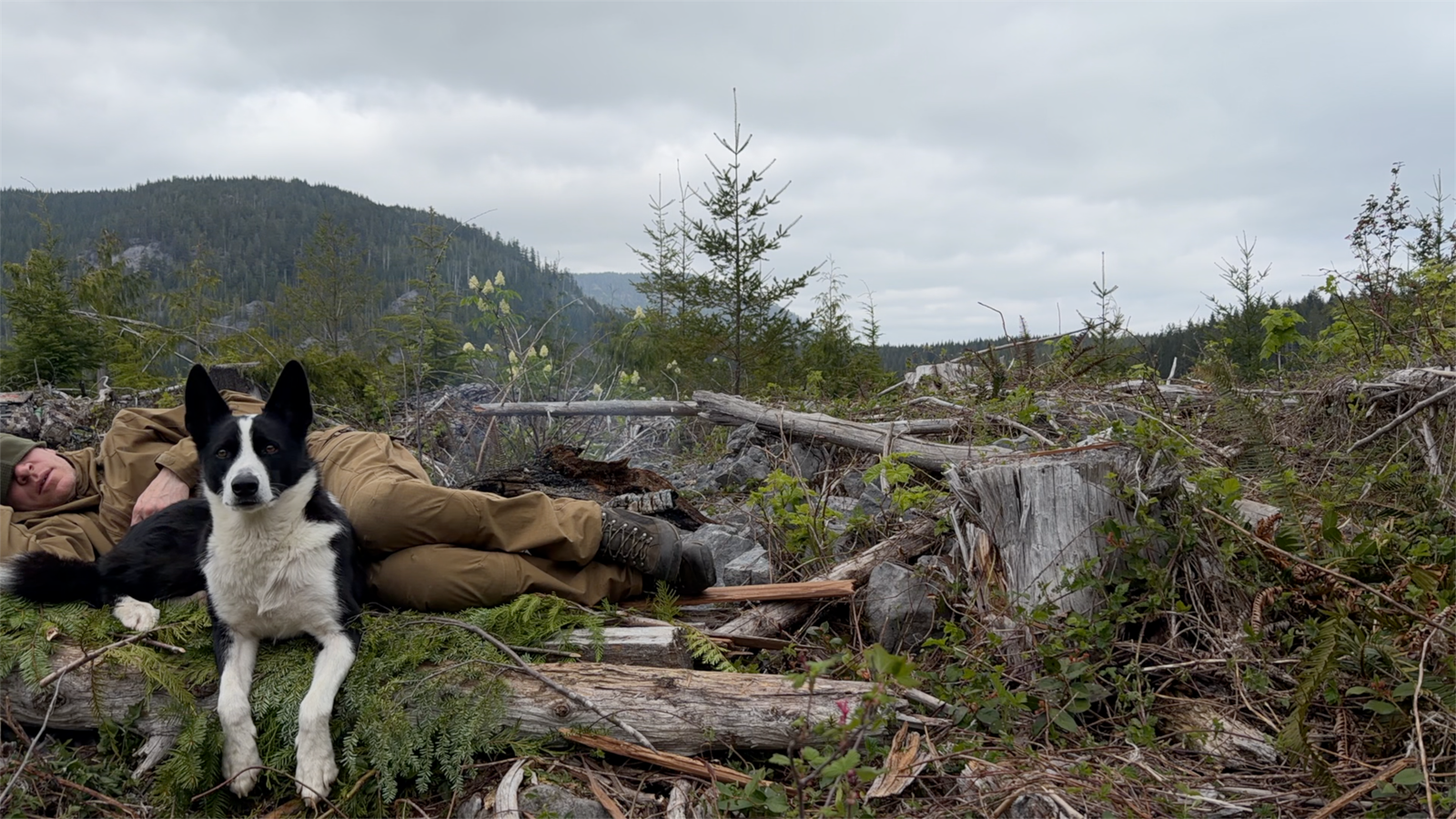
Most modern interactions with the natural world are carefully curated, insulated experiences. We observe landscapes through truck windows, from gravel campground pads, or along well-marked day trails that promise a safe return before dark. Very few choose to cross the threshold where infrastructure ends, travelling for days on foot with nothing but what can be carried on a single pair of shoulders. Fewer still retain the traditional skills required to live comfortably, confidently, and quietly within that space.
For me, wilderness hunting is not an isolated sport or a weekend hobby. It is one of the last remaining endeavours that demands the complete integration of these ancient disciplines.
But to truly understand this, we must make a vital distinction: I am speaking of walk-in wilderness hunting.
This is incomparable to modern vehicle-based camping or casual weekend bushcraft trips. Modern camping is often an escape from the city, where we bring our urban comforts with us to a designated gravel pad. Weekend bushcraft, while valuable as an educational starting point, is ultimately a simulation of skills—a controlled experiment where you carve a wooden spoon or build a decorative lean-to while your vehicle remains parked safely a few hundred meters away. If the weather breaks, the safety valve of modern life is always within arm’s reach.
Walk-in hunting permits no such compromise. It is a true outdoorsman’s path because the stakes are real, and you are bound entirely by the laws of gravity, weather, and your own physical limits. When you leave the road on foot, carrying everything required to survive on your spine, you step into a world of genuine consequences. You cannot simply “tap out” when a storm rolls through or when the terrain turns brutal deep in the mountains.
This sustained, multi-day physical commitment is why walk-in hunting is deeply important to me as a method of reconnection. It demands that you shed the role of a spectator and become an active participant in the ancient, heavy cycle of life and death. You must walk at the pace of the forest, sleep on the damp earth, and carry the physical and psychological weight of your decisions. It is the ultimate test of woodcraft because every skill—from land navigation and fire-lighting to tracking and weather forecasting—must function together seamlessly under pressure. It is not a weekend hobby; it is a profound homecoming.
Day 1: The Creek Highway and the 5 Ws
The truck door clicked shut at 10:00 AM on May 6. The mountain air was a cool 12°C beneath a heavy, overcast Vancouver Island sky. As I locked up the truck, my Karelian Bear Dog, Umka, bounded into the brush, ecstatic to stretch her legs after the long drive. The air smelled rich—thick with the wet, sweet scent of emerging spring flowers and exploding coastal vegetation.
We stepped past the tree line into an old-growth forest dominated by massive, towering red cedars. The canopy was so dense that it swallowed the daylight, creating a quiet, cathedral-like interior. Pushing through the thick, dark understory, bushwalking wasn’t too bad under the old-growth canopy, and before long, we found our first positive sign: fresh bear poop on the damp forest floor. The valley was alive.
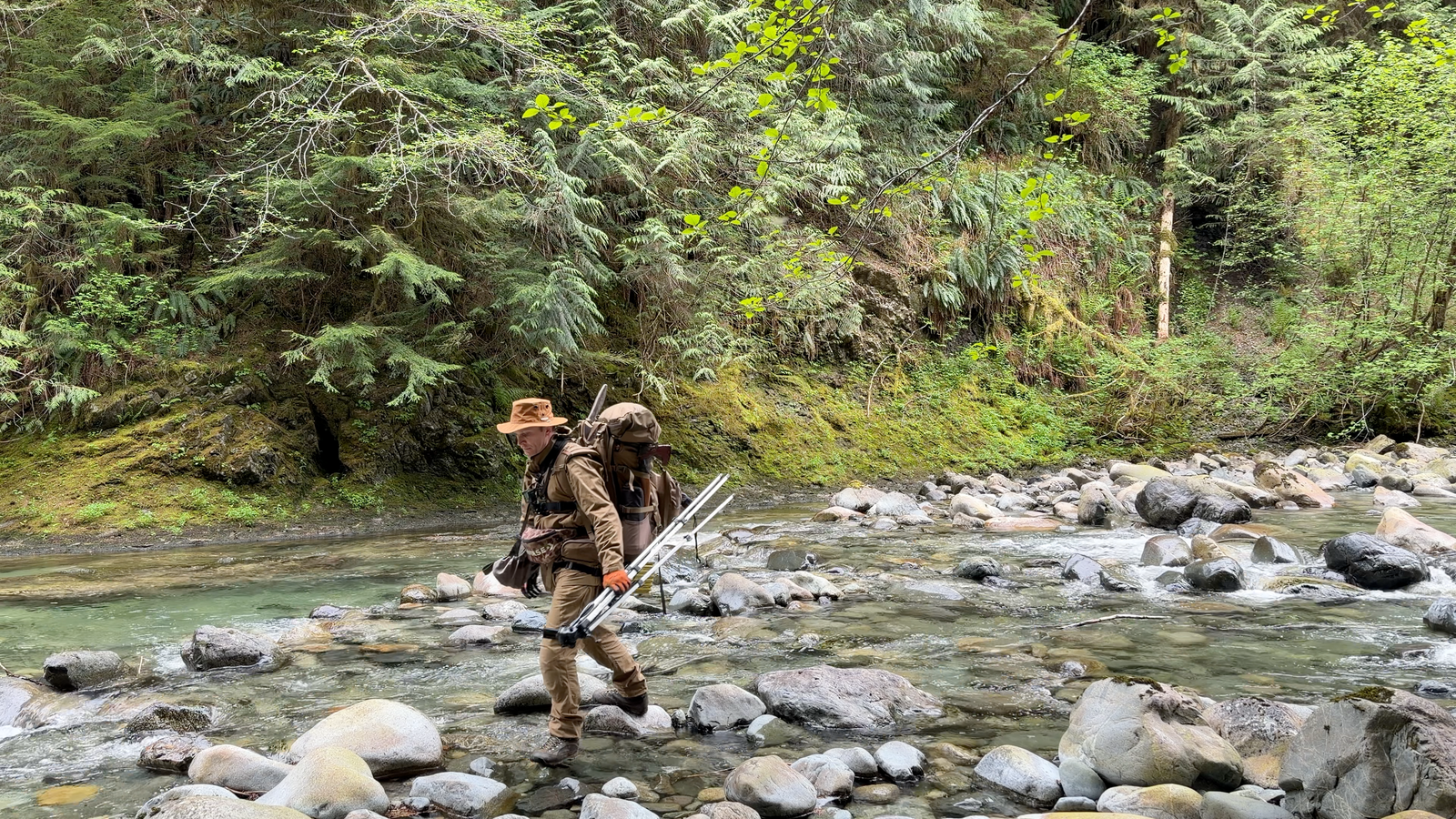
After about two kilometres of pushing through the timber, the forest floor dropped away sharply. We had reached the drainage zone of Hemmingsen Creek. In this part of the world, mountain rivers carve steep, brutal side-hills that wear down your ankles and knees under a heavy pack. Rather than fighting the slippery, vertical soil of the timbered slope, I dropped us down into the creek bed itself. For the next half-kilometre, we used the creek rocks as a highway, rock-hopping our way along the water. It was physically demanding, but far easier than fighting the steep, tangled forest terrain above.
The Hemmingsen Route
- 📍 The Truck
- ↓ (2 km of dense old-growth forest)
- 🧗 Steep Descent
- ↓ (0.5 km of rock-hopping along the creek bed)
- 🏕️ Base Camp
By early afternoon, I found what I was looking for: a stable gravel bar near the rushing water. It was time to build a home. The spot was perfect, and I filtered the layout through the lens of the 5 Ws of Shelter Selection that I teach in our Novice Program:
- Water: I wanted to be close to the creek for endless fresh water, a beautiful view, and to let the rushing torrent naturally mask any noises generated around our camp.
- Wood: The area had an abundant supply of standing deadwood, which I knew I would need my axe to harvest for building a comfortable, insulated bed and gathering firewood.
- Weather: The gravel bar sat on a flat shelf, providing a level, stable footprint that was shielded from drafty valley winds by the surrounding dense timber.
- Wildlife: While some woodsmen avoid camping next to roaring creeks because the noise makes it impossible to hear wildlife approaching, I didn’t worry. I had Umka. Her incredible hearing and sensory capabilities consistently amaze me. With her ears monitoring the valley, I knew we were safe.
- Widowmakers: I scanned the canopy above, ensuring no rotten limbs or dead trees were poised to fall on us in a midnight wind.
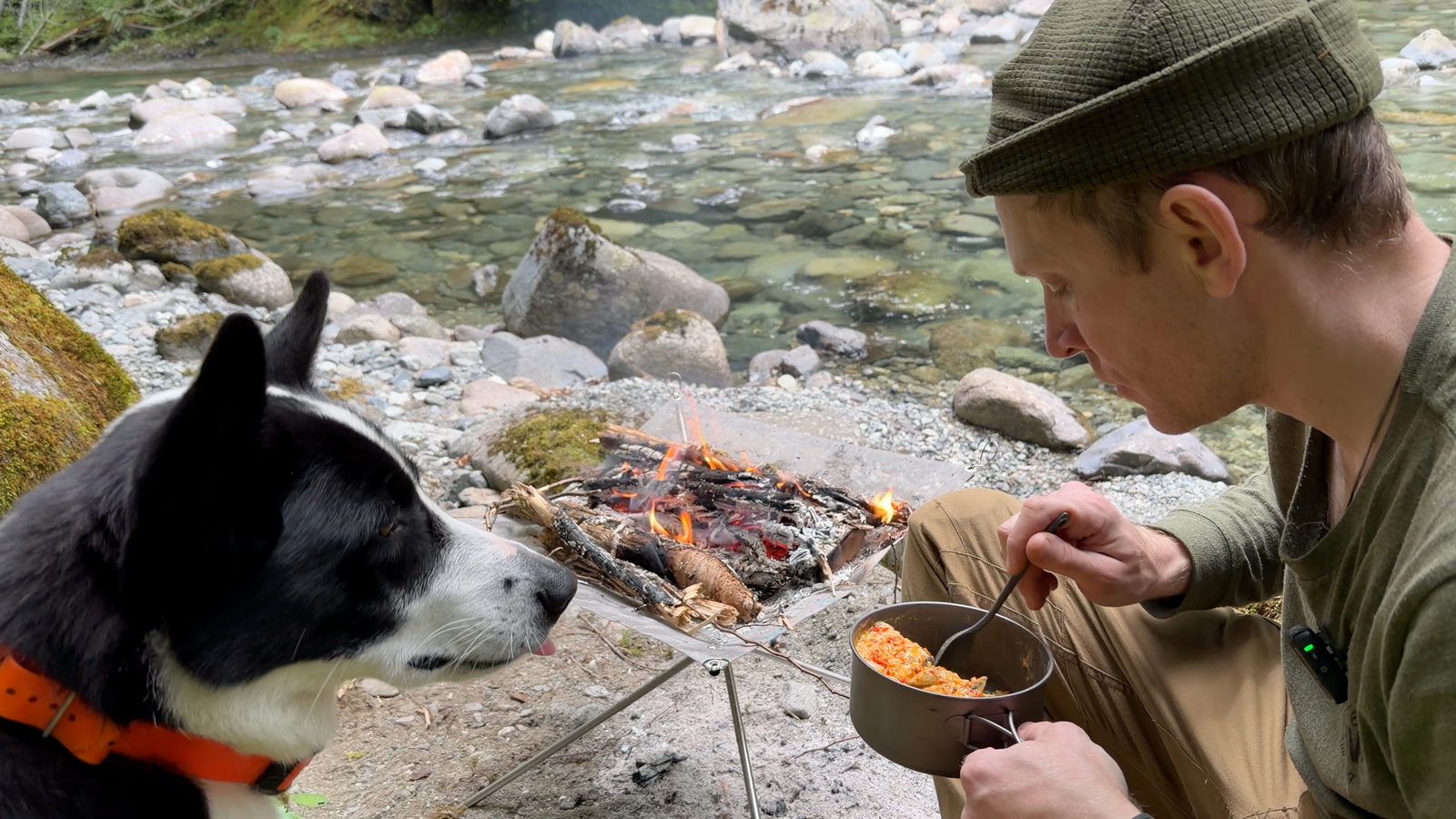
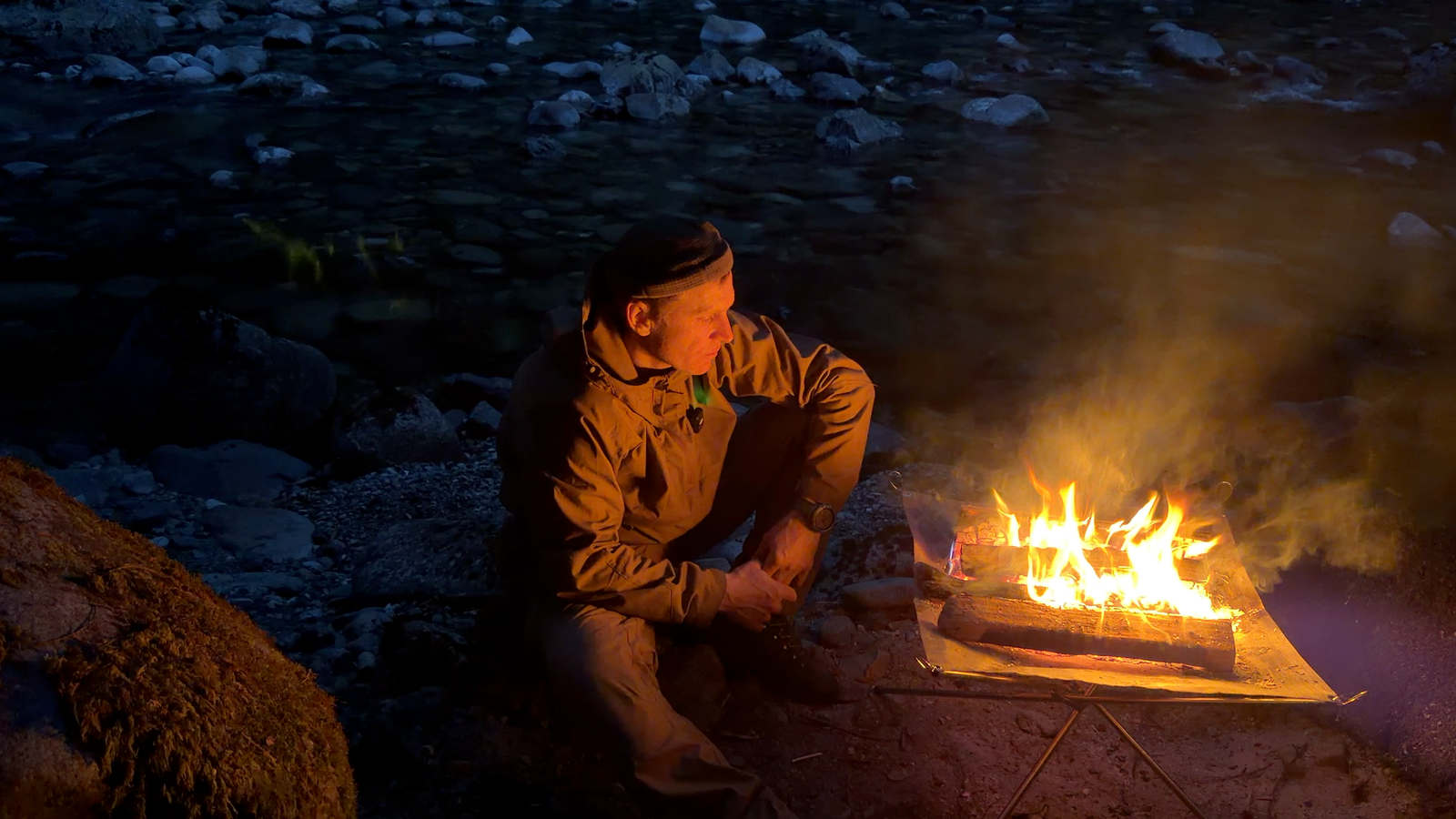
It took me about three hours of physical labour to fully organize the campsite. Using my favourite axe, I notched and laid deadwood to construct a raised bedding platform, insulating my body from the damp ground. Immediately after finishing the bed, I lit a fire on my mesh fire pit. This lightweight, suspended mesh device is an exceptional piece of low-impact gear—it allows me to enjoy a safe, hot fire while keeping the coals off the ground, completely preventing any damage or scarring to the organic forest floor.
The Camp Calculus (Hemmingsen Creek)
- Disadvantages: Roaring water masks wildlife audio; drafty valley floor corridors are prone to cold night-drainage thermals.
- Advantages: Endless supply of clean drinking water; the ambient noise acts as an audio blanket to mask camp chores; provides a pristine, high-visibility view of the valley.
After an hour of sitting by the fire and enjoying the peace of camp, we set out for our first evening hunt.
We hiked three kilometres to a five-year-old clear-cut area, a landscape choked with the fresh, nutrient-rich green vegetation that spring bears actively seek. As we travelled, Umka worked the game trails ahead. At one point, her instincts pulled her 800 meters away into the timber. Tracking her via the Garmin Alpha 300i screen, I watched her movements closely, knowing the colour display could track her up to three kilometres away in this terrain. However, once we settled into a stationary glassing position overlooking the open cut, I called her in. I do not allow her to run wild while we are glassing. She was incredibly patient, listening to my command and sitting quietly at my side.
As the shadows lengthened, I found a lot of fresh elk scratches on the trees. Then, I caught movement. A mature, majestic Elk bull stepped into the open cut, slowly grazing his way directly toward our position.
Umka’s body went rigid. She had successfully hunted moose, deer, and elk before, and she badly wanted to go work this animal. Her eyes darted constantly between the massive bull and my face, looking completely confused: Why are we just sitting here? Why aren’t we going to get him? But her command was to stay. She held her ground, processing her confusion in silence.
The bull closed the distance to 80 meters—so close. I decided to make a predator call to see how he would react. Hearing the sound, the elk spun his head and saw us. To my surprise, he didn’t bolt. Instead, he calmly lay down in the brush, completely relaxed, and watched us back.
The Glassing Encounter
- Our Position: The Hunter & Umka (Stationary & Concealed)
- ↕ Separated by 80 meters of open cut vegetation
- Target: Mature Roosevelt Elk Bull (Relaxed & Bedded Down)
It was a magnificent, peaceful evening. But as the sun dipped, the damp sub-alpine cold began to seep through my clothes. Sitting perfectly still for hours on a mountain ridge will drain your core temperature rapidly. Shivering, I looked forward to the hike back to the comfort of camp, fire, and dinner.
We returned to the river bar in the dark, arriving late. Pushing through the blackness, the camp did not feel strange or hostile; it already felt like a familiar sanctuary. Around 11:00 PM, I cooked a late dinner over the fire: pasta tossed with fresh trout. Eating hot food by a crackling fire next to a mountain stream after a gruelling day is a feeling that cannot be bought in a city.
Before bed, I watched Umka walk down to the freezing creek, step directly into the current, and lie down to cool her muscles after running kilometres of mountain trails. Animals do not complain about the elements; they simply adapt and utilize what the environment provides. There is a deep lesson in that for human beings.
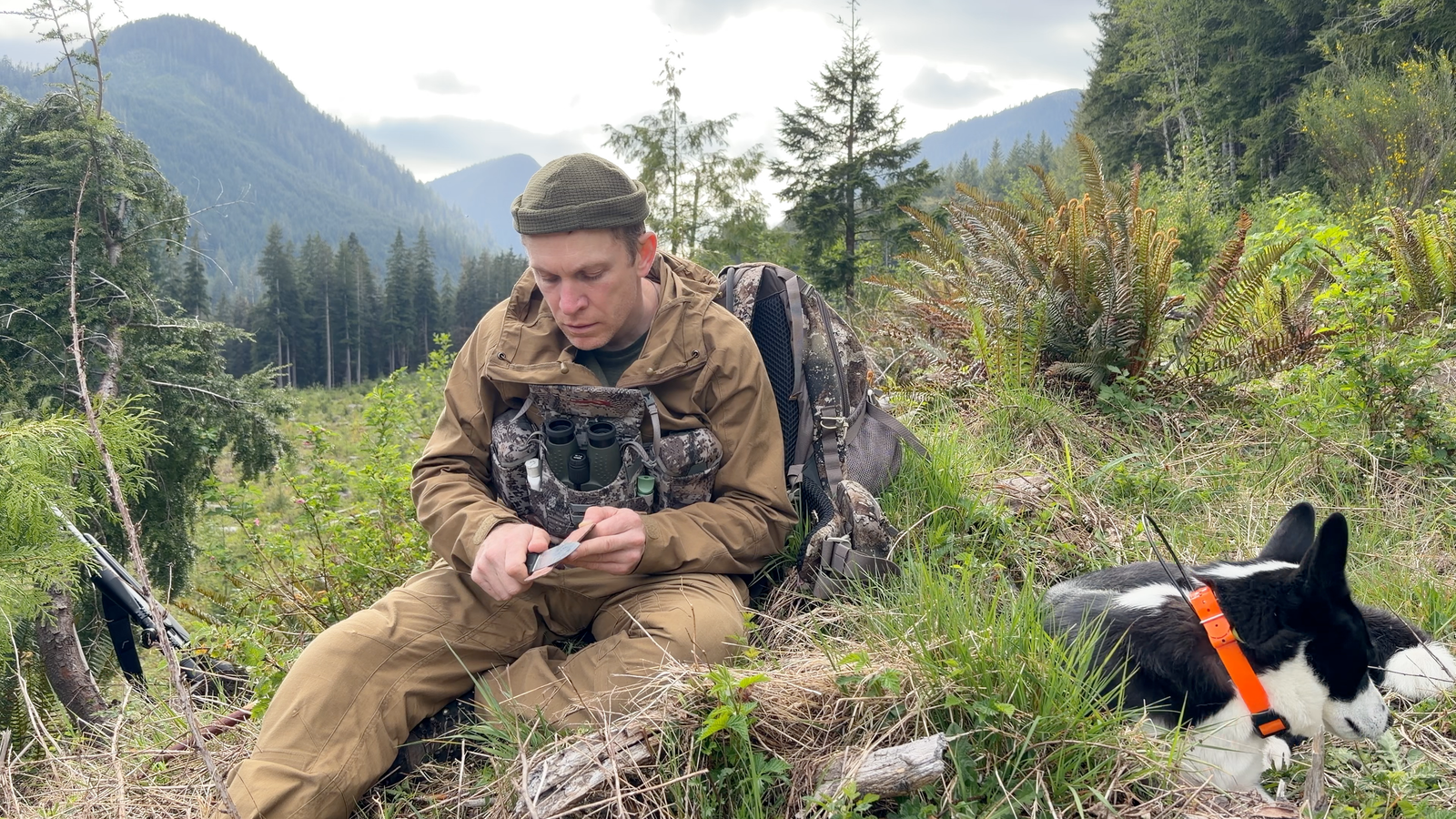
Before crawling into my sleeping bag, I worked on a few camp chores with the Victorinox Venture fixed blade knife, cutting toggles and preparing feathersticks from dry wood to ensure an easy start for the morning fire. I have decided to use a different knife on every trip to review them as potential “one knife” solutions for the modern outdoorsman. While it performed well enough to restore a fire, I noted several design flaws that I didn’t care for—details I resolved to analyze in a separate field review.
- Day 1 Lesson: I was too cold during the evening sit. I must carry an extra insulation layer into the glassing zones tomorrow.
Day 2: The Horizon of the Scout
My eyes opened at 5:00 AM after a deep, restful five hours of sleep. While five hours is short by modern standards, a wilderness instructor cannot afford to sleep through the peak window of morning wildlife activity.
The valley had dropped to 5°C, wrapped in a suffocating, dense mountain fog at the higher elevations. The damp chill made sitting miserable, so I chose to stay on the move rather than glassing from a frozen perch. As the morning progressed, the sun broke through the fog, bathing the ridges in brilliant light. I took advantage of the warmth to sit on a log and field-sharpen the Victorinox knife. After five minutes of patient stone work, the steel returned to a razor-sharp, hair-shaving edge.
The morning yielded no bear sightings, but I felt no frustration. Hunting is not an achievement sport; it is an active meditation. Coming back to our river camp at noon felt like returning to a sanctuary of my own creation. I cooked a simple, hearty lunch of rice and horse mackerel.
The Perspective Matrix
- The Consumer Mindset: Driven entirely by the trophy | Measures success strictly by the kill | Frustrated by empty, quiet valleys.
- The Hunter’s Mindset: Driven entirely by the process | Measures success by raw sensory immersion | Rejuvenated by the lessons learned.
I knew that if I wanted to maintain my physical endurance and mental clarity for the rest of the trip, I needed to manage my energy. I lay down on the hand-hewn cedar bed and took a two-hour nap. I woke up completely refreshed, in a fantastic mood, ready to execute a demanding evening plan: a 13-kilometre trek to scout three unvisited, distant clear-cuts.
The afternoon hike was spectacular—mild weather, clear mountain air, and beautiful vistas. However, by the time we returned to the fire that evening, we had found almost no fresh bear sign. I sat by the coals, facing a classic tactical dilemma: do I stay in this beautiful, established camp and hope a bear rotates through, or do I pack up, sacrifice tomorrow’s morning hunt, and scout completely new territory?
The instructor in me always leans toward exploration over comfort. I choose adventure. The decision was made: tomorrow morning, we would break camp and move to an entirely different zone.
Day 3: Gravity, Grit, and the First Harvest
After packing up camp, we drove 1.5 hours down rough forestry roads to a secondary mountain zone. Satellite imagery had shown a complex network of older clear-cuts and deactivated, overgrown logging roads—ideal habitat for spot-and-stalk hunting. My strategy for Day 3 was absolute: pack light, stay out for the entire day, and do not return until after sunset.
By mid-afternoon, we had logged 15 kilometres over brutal, unmaintained terrain. Both Umka and I were feeling the cumulative weight of the trip. Recognizing the onset of fatigue, I decided we needed a tactical rest.
I found a deactivated logging roadbed covered completely by gravel. This was the ideal place to stop. Building a fire directly on the packed gravel and rocks of an old roadbed is an exceptionally safe practice; there is no organic forest floor, dry duff, or underlying root systems that can catch sparks and silently spread fire underground. Using dead branches and fresh, fragrant trimmings from a nearby fallen red cedar, I constructed a quick, comfortable bough bed on the side of the road. I lit a small, controlled fire directly on the gravel to dry our gear and provide warmth.
As the smoke drifted up into the trees, Umka curled up tight against my side. She lay there perfectly alert, her ears twitching, monitoring the forest sounds while I closed my eyes. The sheer feeling of freedom in that moment was indescribable. I wasn’t a visitor in the woods; I was entirely home. I was one with nature.
At 8:30 PM, the shadows were long, and the mountain was growing cold. We had been on our feet for hours, crossing the 25-kilometre mark for the day. We were walking down a heavily overgrown, deactivated logging road. Umka was working out ahead, roughly 150 yards in front of me, approaching a sharp, blind bend in the old roadbed. Beyond that bend lay a steep, brushy slide.
Suddenly, the silence was shattered.
Umka exploded into a fierce, aggressive, continuous baying. I knew that bark instantly—she was on a bear.
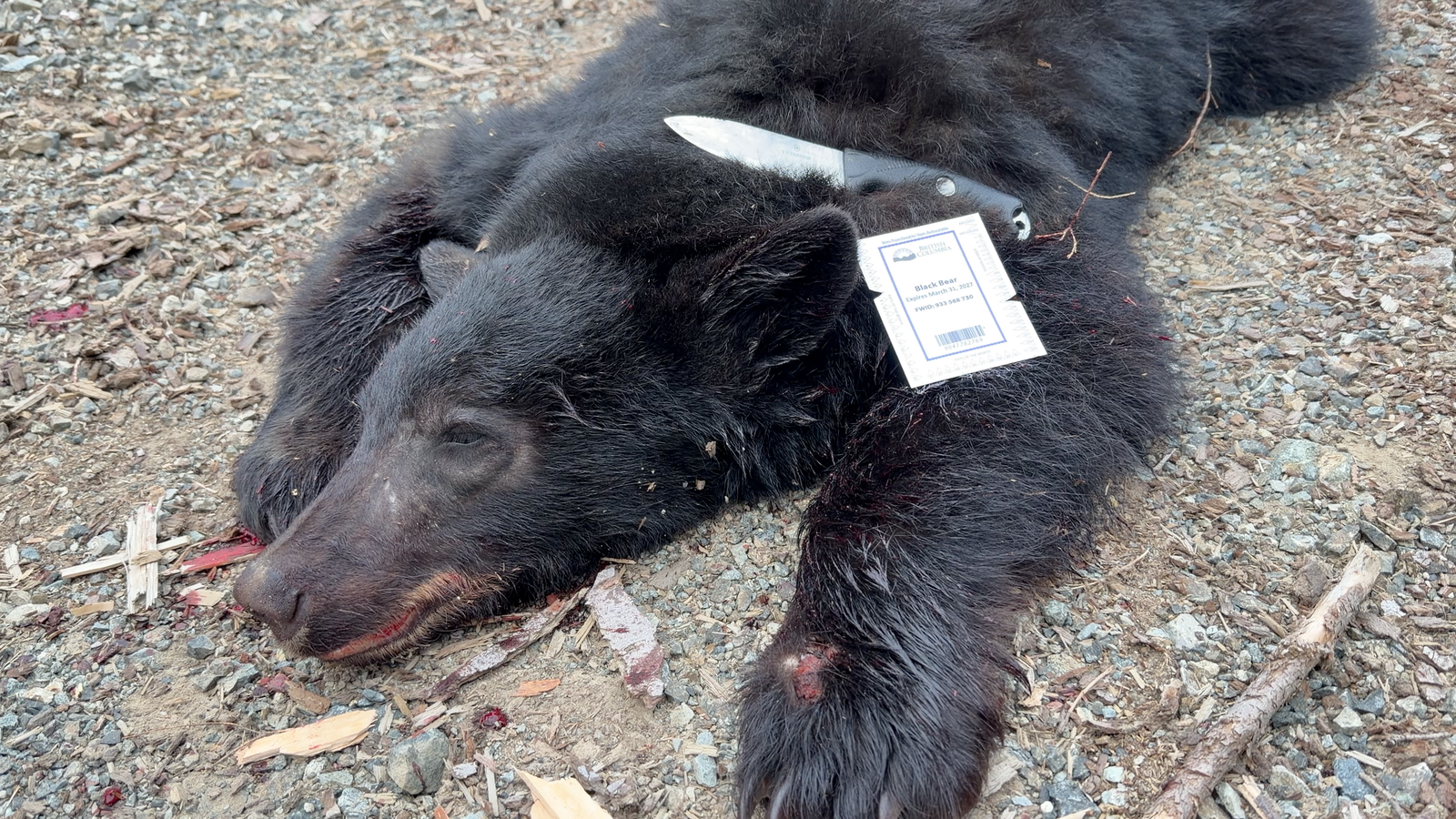
My physical exhaustion vanished. I sprinted toward the turn, holding my rifle ready. As I cleared the bend, the scene unfolded on the steep, sloping hillside above me. A young black bear was aggressively facing off with Umka. The bear lunged, attempting to swat her, but Umka danced backward with incredible athletic agility, maintaining a precise, safe perimeter while keeping the animal pinned on the slope.
The bear attempted to break and run, but crashed into a thicket of brush, losing its footing on the steep incline and rolling several times down the slope. Umka was relentless, staying right on his flank, barking with intense authority.
I closed the distance to 60 yards and evaluated the situation. The bear was young—roughly two years old. Under normal circumstances, I pass on young animals, preferring to let them mature. But this moment carried a different weight. This was Umka’s first definitive bear encounter in the wild. If I chose not to harvest this animal, the lesson for her would be fractured. She would not understand the ultimate goal of the work we had practiced for years. She had performed flawlessly; she had done her part as a true hunting partner.
I waited for a clear separation between the dog and the target. Umka stepped back into a safe position, clearing my line of fire. I raised the rifle, verified my backstop on the hillside, and took a clean headshot.
The bear dropped instantly. The echoes of the shot faded into the valley, replaced by the sudden, heavy return of the mountain’s silence.
The Weight of the Harvest
As I walked up to the animal, a wave of complex, contradictory emotions hit me. There is always a profound solemnity in ending a life, especially a young one. If a hunter does not feel the gravity of that moment, he has lost his humanity. Yet, looking down at Umka, the feeling shifted to pride. She refused to leave the bear’s side, sitting over it like a sentinel. She had graduated from a training companion to a true, proven wilderness harvester.
The logistics of a walk-in harvest are where the real work begins. We were 2.5 kilometres away from the truck, without our primary meat-hauling packs or game bags. Although Umka did not want to leave the bear—lingering closely beside it to guard her first hard-earned harvest—my command had priority. Her extensive wilderness training took over, and we hiked back to the truck together in the dark to retrieve the heavy pack frames and necessary equipment.
The breakdown and skinning were performed entirely by headlamp in the pitch-black mountain night. We meticulously processed the meat, loaded the heavy packs, and began the long, slow trek back to the truck. We returned home at 2 am of the next day—exhausted, sore, and covered in forest grime, but deeply satisfied.
The Working Dog Dynamic
- Loud Influencer Culture: Dog treated as an aesthetic accessory | Uncontrolled, untethered off-leash runs | Constant, noisy performative distractions.
- ONE WITH NATURE Identity: Dog respected as an independent working partner | High-discipline backcountry obedience | Shared silences and active, acute scent awareness.
Field Testing vs. The Marketing Myth
The wilderness is a ruthless critic of consumerism. Every spring, outdoor brands release “tactical survival gadgets” painted in olive drab, marketed to give people a false sense of security. But three days of continuous sub-alpine drizzle will quickly separate marketing copy from field reality.
On this trip, I carried the Victorinox Venture fixed blade. My philosophy on blades—and all gear—remains strictly minimalist: if a tool relies on complexity, it is a liability.
Take fire production, for instance. You do not need an over-engineered solar lighter or an emergency survival pod. My preferred ignition aid remains a standard cotton makeup removal pad soaked in paraffin wax. It is completely waterproof, weighs virtually nothing, costs pennies, and burns with a steady, fierce flame for several minutes even when battered by wind.
Gear Philosophy
- The Gadget Fallacy: Over-engineered survival tools | Heavy reliance on moving mechanical parts | High-cost, hyper-marketed tactical hype.
- The Practical Reality: Simple, multi-use wilderness gear | Absolute dependability of manual skill mastery | Lightweight, quiet, field-proven efficacy.
The ultimate survival tool is not inside your pack; it is the judgment, experience, and adaptability inside your mind.
Conclusion: The Lessons of the Mountain
The meat from that young bear proved to be incredibly tender and exceptional sustenance for my family. More importantly, Umka now carries herself with quiet confidence. She knows she is a vital, contributing partner in our survival ecosystem.
Expeditions like this remind me of what it means to live an extraordinary, authentic life. The wilderness doesn’t give handouts; it extracts a price in sweat, cold, and blisters, but it pays you back in clarity, purpose, and a restored spirit.
Modern culture wants us to be comfortable, distracted, and soft. Pushing yourself into the mountains reminds you of what your ancestors always knew: that true security is found in your own capability, your own discipline, and your relationship with the earth.
I hope you have some activities in your own life that make you feel the same way.
The video of the trip is available on the YouTube Channel ONE WITH NATURE: Watch the Film Here
Stay safe, respect nature, and I will write you after the next adventure.
ONE WITH NATURE Corp.